From Luxury to Comeback: The History of Wallpaper and Why Professional Installation Still Matters
From Luxury to Comeback: Why Wallpaper Has Always Been More Than Decoration
Wallpaper has never been just paper on a wall.
Long before modern wallpaper rolls, peel-and-stick panels, grasscloth wallcoverings, and custom digital murals, people were using walls to say something about taste, status, craft, and imagination. A decorated wall could make a room feel richer, larger, softer, more dramatic, more personal, or more complete.
That is still true today.
A beautiful wallcovering can change the entire feeling of a room. But the final result depends on more than choosing a pattern. It depends on the wall, the material, the preparation, and the judgment of the installer. That is why professional wallpaper installation still matters, especially with luxury wallcoverings, grasscloth, murals, and designer papers.
What is wallcovering?
Wallcovering is the broader term for materials used to cover and finish walls. Wallpaper is one type of wallcovering, but the category also includes grasscloth, vinyl, fabric-backed commercial wallcoverings, natural fibers, cork, murals, hand-painted panels, and specialty designer materials.
In everyday conversation, people often say “wallpaper” for all of it. In the trade, the material matters. A printed paper, a natural grasscloth, a commercial Type II vinyl, and a custom mural do not behave the same way on the wall. They require different preparation, different adhesives, different handling, and different expectations.
That is one reason a professional wallpaper installer looks at more than the pattern. The installer is also looking at the wall surface, seams, corners, pattern match, lighting, humidity, material movement, and how the product will perform after it is installed.
A short history of wallpaper and decorated walls
The story starts before paper.
Ancient Romans decorated walls with frescoes, pigments, and illusionistic painting. In some rooms, the wall was treated almost like a stage. Painted architecture, garden scenes, marble effects, and landscapes made rooms feel larger or more luxurious than they were. The idea was simple and powerful: a wall does not have to feel like a boundary. It can become an experience.
That same idea still shows up in today’s scenic murals and custom wallpaper installations. A powder room wrapped in a mural, a dining room covered in a botanical scene, or a hallway finished with a dramatic wallcovering is using an old idea in a modern way: transform the room by transforming the wall.
During the Renaissance, wall decoration became more accessible. Wealthy homes used tapestries, painted panels, and even gilded leather wallcoverings. Printed paper eventually offered a more affordable way to bring pattern and ornament into a room. Early wallpaper was not simply decoration; it was a way to get the feeling of luxury without the cost of tapestry or hand-painted walls.
That tension still exists today. There are accessible wallpapers, and there are premium wallcoverings that require specialized installation. The market has always had both.
Wallpaper as a luxury design feature
By the Victorian period, wallpaper had become more widely available. Machine printing made wallpaper less expensive and easier to produce at scale. More homes could use pattern, color, and ornament on their walls.
But mass production also created a backlash.
William Morris and the Arts and Crafts movement argued for craft, beauty, natural forms, honest materials, and careful production. Morris designs such as Willow Bough, Acanthus, and Strawberry Thief remain influential because they were not just patterns. They were a philosophy: a wallcovering should be useful, beautiful, and made with intention.
That argument never disappeared.
When a modern client chooses a hand-crafted wallcovering, a natural grasscloth, a block-printed paper, or a specialty designer material, they are often responding to the same idea. They want something with depth, texture, irregularity, and presence. They want the room to feel considered, not generic.
Luxury wallcoverings are not only about price. They are about material, craft, and the effect the wall has on the room.
Why wallpaper became popular again
Wallpaper went through a long quiet period in many American homes. Paint became the default. Minimalism made pattern feel dated. Many people associated wallpaper with old houses, difficult removal, or designs they remembered from decades ago.
Then the comeback began.
Digital printing made custom murals and large-scale imagery easier to produce. Designers started using powder rooms, dining rooms, bedrooms, and feature walls as places for bolder pattern. Social media helped people see how much personality a wallcovering could bring to a space. At the same time, natural materials such as grasscloth, jute, sisal, cork, and textured wallcoverings brought warmth back into interiors.
Today’s wallpaper is not one thing. It can be quiet and textured, bold and graphic, traditional and botanical, modern and architectural, or fully custom. For many homeowners and designers, wallcovering has become a way to make a room feel finished.
Why installation still matters
The better the wallcovering, the more the installation matters.
A simple printed wallpaper can still be ruined by poor wall preparation, bad seams, crooked layout, or the wrong adhesive. A luxury grasscloth or mural is even less forgiving.
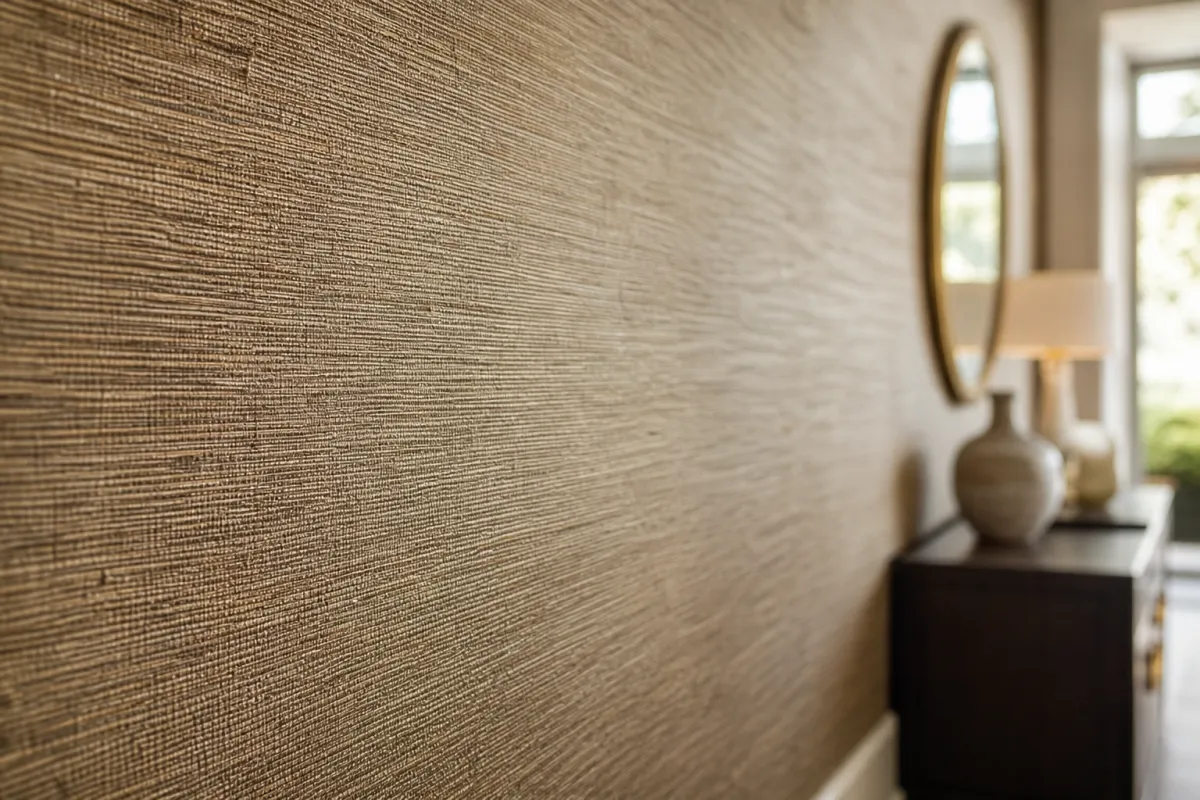
Grasscloth wallcovering, for example, is made from natural fibers. The beauty comes from texture and variation, but that also means seams may be part of the look. Dye lots can vary. Panels need to be planned carefully. A client should understand what is normal before the material ever goes on the wall.
Custom mural installation has a different challenge. A mural is often one continuous image across multiple panels. If the layout is off, the image is off. There is no random pattern to hide behind. Every seam and every alignment decision matters.
Wall preparation is just as important. Walls may need smoothing, priming, sealing, or correction before installation. Corners are rarely perfect. Lighting can reveal seams or wall defects. Humidity and air conditioning can affect how materials behave, especially in South Florida homes.
That is why hiring a professional wallpaper installer is not just about getting the paper onto the wall. It is about judgment before, during, and after installation.
What South Florida homeowners and designers should know
For South Florida homeowners, designers, and builders, wallpaper installation comes with local considerations. Humidity, air conditioning, plaster or drywall conditions, powder rooms, coastal homes, and high-end natural materials all affect the final result.
Before ordering wallpaper or wallcovering, it helps to ask:
- What material is this? - Is it paper, vinyl, grasscloth, fabric-backed, peel-and-stick, or a mural? - Does the wall need preparation before installation? - How many rolls or panels are required? - Is there a pattern repeat? - Are seams expected to be visible? - Is this material appropriate for the room? - Should a professional installer review the product before it is ordered?
Those questions can prevent expensive mistakes.
A good wallpaper installation begins before the first roll is opened. It starts with understanding the room, the material, and the result the client wants.
Final takeaway
Wallpaper has moved through history as luxury, craft, fashion, technology, and personal expression. It has been painted, printed, blocked, woven, gilded, mass-produced, dismissed, revived, and reinvented.
But one thing has not changed: the wall is still one of the most powerful surfaces in a room.
A well-chosen wallcovering can add warmth, drama, texture, history, and personality. A well-installed wallcovering can make it feel effortless.
If you are planning a wallpaper or wallcovering installation in South Florida, The Wallpaper Lab can help you think through material, placement, wall preparation, and professional installation before the first roll is opened.
Planning a wallpaper or wallcovering project in South Florida?
The Wallpaper Lab provides professional wallpaper installation, wallcovering installation, and material-aware guidance for homeowners, designers, builders, and commercial clients. Contact us before you order so the wall, material, and installation plan work together from the start.
